
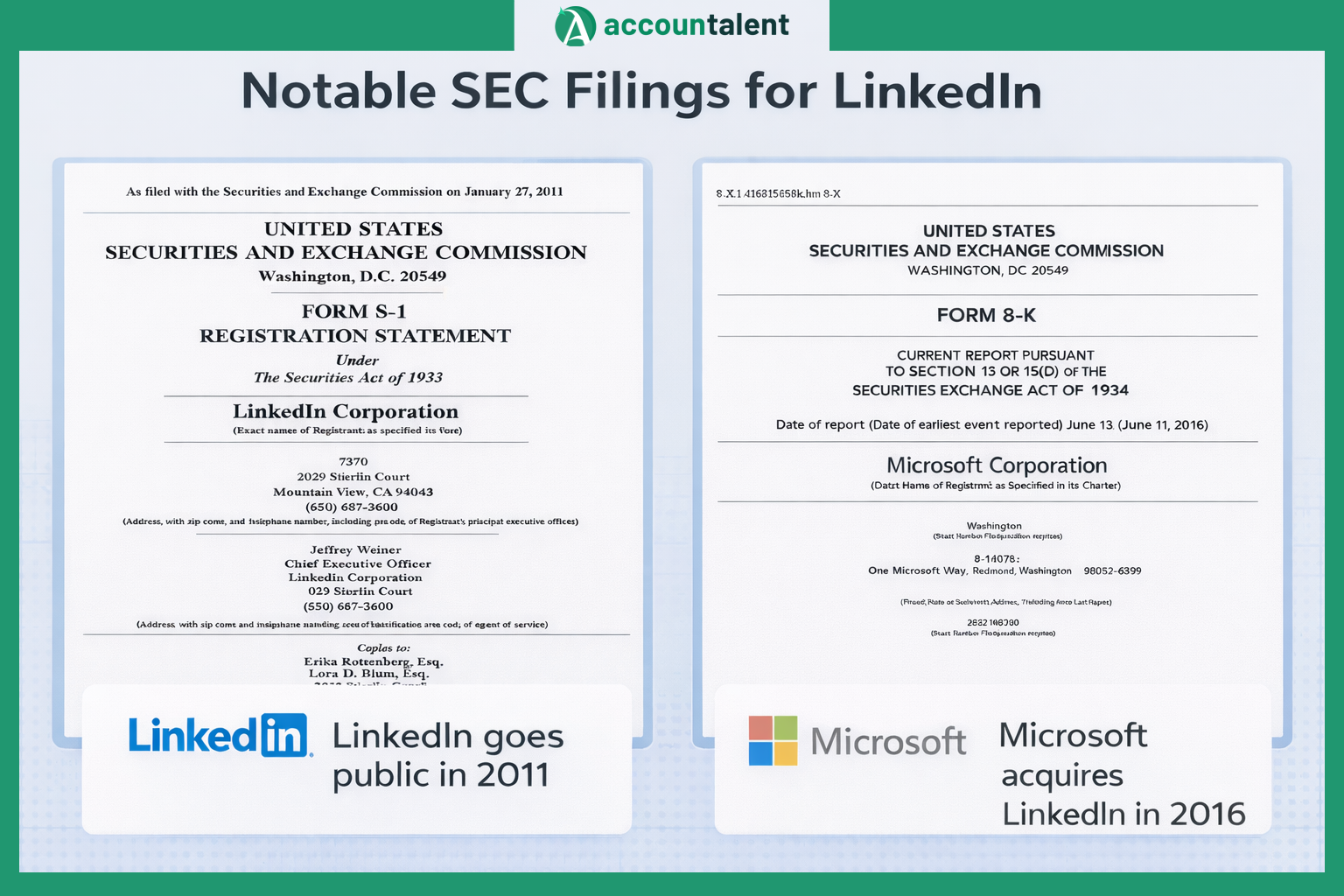
The LinkedIn Equity Story – Two Home Runs for Shareholders
The founders of LinkedIn were masters at managing equity. So, well, in fact, the shareholders enjoyed not one, but two major home-run liquidity events.
The Private Company Years – 2002 to 2011:
- LinkedIn was founded by Reid Hoffman in 2002 and launched just five months later
- Early funding included an Angel round followed by Series A, raising over $5M
- Marc Andreessen participated in the Angel round and Greylock in the Series A
- LinkedIn reached profitability in 2006
- Between 2008 and 2010, LinkedIn raised most of its remaining funding, reaching a total of $150 million.
IPO – 2011 (Home Run #1):
- Pre-IPO valuation: $2B
- Valuation at IPO pricing: $4.25B
- Valuation at the end of the first trading day: $9B
- Value of Reid Hoffman’s shares after day one: $2B
- Pre-IPO shareholders controlled 99% of the voting power due to a dual class stock structure:
- Insiders had Class B shares: 10 votes per share
- Public had Class A shares: 1 vote per share
- Highest market valuation as a public company: $30B
Microsoft Acquisition – 2016 (Home Run #2):
- Purchase Price: $26.2B in cash (remember, they went public at a $4B valuation)
- LinkedIn stock price just prior to the announcement: $131per share
- Microsoft acquisition offer price: $196 per share – a 50% premium
- Between IPO and the acquisition, Reid Hoffman sold about 4.5M shares
- Even after those sales, he still held 14.5M shares worth about $3B
Observations From the LinkedIn Story:
- Equity was treated as a precious resource
- Early valuations were reasonable and that limited founder dilution
- Profitability came early, reducing dependence on outside capital
- Founder ownership stayed meaningful all the way to the Microsoft acquisition
- Stock sales by founders were gradual and measured
- The dual-class stock structure balanced public investment with long-term control
- Big decisions appeared to favor long-term value over short-term optics
Bottom line:
The process looked steady, patient and disciplined – the opposite of the “raise as much as possible as soon as possible” mentality.
LinkedIn is a great example of how a thoughtful capital strategy and respect for equity can create extraordinary long-term outcomes.